
By Vincent Howard, CPA | Managing Partner, Howard, Howard and Hodges | SkillAbility for Accounting Firms
Last updated: July 2026 | 14-minute read
The old public accounting development model was simple.
Junior staff prepared.
Seniors reviewed.
Managers fixed.
Partners advised.
That model was never perfect, but it had one advantage: junior accountants learned by doing a lot of preparation work.
They entered data.
They prepared workpapers.
They completed reconciliations.
They worked through returns.
They received review notes.
They corrected mistakes.
They slowly learned what good work looked like.
Now automation and AI are compressing that path.
More routine preparation work is being automated, accelerated, or assisted by software. That does not eliminate the need for accountants. But it does change what junior accountants need to be good at earlier in their careers.
They are no longer only preparing work.
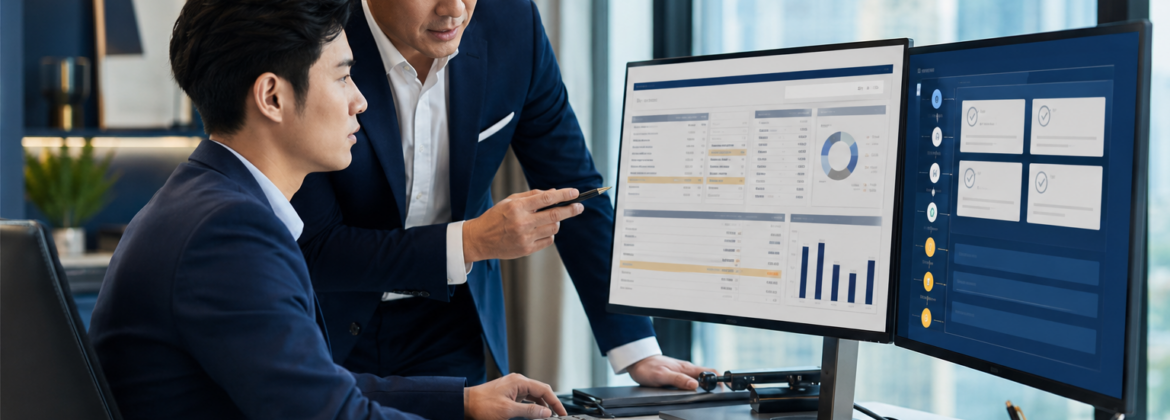
They are being asked to review outputs, validate workpapers, spot inconsistencies, question assumptions, document conclusions, and escalate issues.
That is not just software training.
That is judgment training.
The future junior accountant will not be valuable because they can produce work faster. They will be valuable because they can tell whether the work is right.
Who I Am and Why You Should Listen
I’ve been in public accounting since 1990. I founded my own firm in 1993, merged it in 2001 to form Howard, Howard and Hodges, and grew it from three people to 50 staff across four locations and multiple states. Our firm was named PASBA Firm of the Year.
I grew up in the old apprenticeship model.
You did the work. You got review notes. You fixed the work. You learned by repetition. Over time, you started to understand why the reviewer asked the questions they asked.
That model created judgment slowly.
But it depended on the preparer doing enough work to see enough patterns.
Now AI and automation are changing that sequence.
Junior staff may touch fewer routine steps, but still be expected to understand whether the result makes sense. They may use AI-generated summaries, automated reconciliations, imported data, workflow tools, and draft workpapers before they have built the pattern recognition that traditional preparation work used to develop.
That creates a training problem.
If firms keep training junior accountants only as preparers, those staff may not be ready for the reviewer-style responsibilities arriving earlier in their careers.
Since 2020, I’ve built and run a structured workforce development platform that more than a thousand accounting professionals across dozens of PASBA member firms have moved through. The lesson is clear: firms have to develop staff for the work that is coming, not only the work that used to train them.
Why This Matters Now
The accounting profession is not moving away from human judgment. It is moving toward more of it.
The U.S. Bureau of Labor Statistics projects about 124,200 openings for accountants and auditors each year from 2024 to 2034. BLS also describes accountants and auditors as professionals who prepare and examine records, identify opportunity and risk, provide solutions, evaluate data risks, and help organizations run efficiently.
That matters because automation does not remove the need to identify risk, interpret results, or explain what the numbers mean.
Journal of Accountancy reported in 2026 that as entry-level tasks are automated, accounting training will need to shift toward judgment, simulation, and continuous upskilling.
Journal of Accountancy has also reported that AI tools may automate a growing number of audit tasks, but human review remains necessary.
CPA.com’s 2025 AI in Accounting Report described the first rung of the profession as shifting upward, with entry-level roles increasingly requiring AI fluency alongside accounting fundamentals.
That is the heart of the issue.
The entry-level accountant is not disappearing.
But the entry-level learning curve is changing.
Staff may be asked to review work before they have been trained to think like reviewers.
1. The Preparer Role Is Changing
For decades, preparation work was the proving ground.
Junior accountants built capability through repetition. They prepared schedules, tied numbers, entered data, reconciled accounts, rolled forward workpapers, completed basic returns, and learned through review notes.
That work was not glamorous.
But it taught patterns.
It taught what normal looked like.
It taught where mistakes appeared.
It taught what reviewers cared about.
It taught how client data moved through the firm’s workflow.
Automation is now removing or compressing parts of that repetition.
That can be good for productivity.
But it creates a serious development question:
If software does more preparation work, where will junior accountants learn the judgment that preparation used to build?
That is the new training problem.
The goal is not to protect every old task forever.
The goal is to preserve the learning that those tasks used to provide.
| Old Development Model | New Development Pressure |
|---|---|
| Junior staff prepare large amounts of routine work | Automation handles or accelerates more routine preparation |
| Staff learn patterns through repetition | Firms must create structured pattern-recognition training |
| Review notes slowly build judgment | Staff need judgment practice before live review exposes the gap |
| Seniors review after years of preparation | Junior staff may validate outputs earlier |
| Training follows the work | Training must anticipate the role shift |
Preparation is not going away completely.
But preparation alone is no longer enough as the training foundation.
2. Review Work Requires a Different Skill Set
Preparing work and reviewing work are related, but they are not the same.
Preparing is about completing the task.
Reviewing is about evaluating whether the task was completed correctly, clearly, and with the right judgment.
That requires a different mindset.
| Preparer Skill | Reviewer Skill |
|---|---|
| Follow the workflow | Question whether the workflow produced the right result |
| Complete the workpaper | Evaluate whether the workpaper supports the conclusion |
| Use the software | Validate the software output against facts and support |
| Answer the client’s request | Ask whether the client’s explanation makes sense |
| Submit the file | Document what was questioned, what is open, and what needs escalation |
This does not mean junior staff should immediately become final reviewers.
They should not.
But they should start learning reviewer thinking earlier.
That means teaching them how to ask:
- Does this make sense?
- What changed?
- What is missing?
- What assumption is this relying on?
- What would the reviewer question?
- Does the support match the conclusion?
- When should this be escalated?
Those questions are the bridge from preparation to review readiness.
3. The Danger of Skipping the Learning Curve
Automation can create a dangerous illusion.
The work looks finished.
The file looks clean.
The summary sounds professional.
The dashboard is organized.
The reconciliation ties.
The AI-generated language reads confidently.
But that does not mean the work is right.
If junior staff do not understand the underlying work, they may accept outputs they cannot evaluate.
That is the danger of skipping the learning curve.
When Staff Are Reviewing Outputs They Do Not Yet Understand
High risk
Review risk
Training gap
Manager burden
Strategic risk
Visual framework based on SkillAbility’s development-first approach: automation creates risk when output speed increases faster than staff judgment, skepticism, and review readiness.
The solution is not to slow down technology.
The solution is to speed up judgment development.
4. Why AI Workpapers Create a New Training Problem
AI-generated work can be useful.
It can summarize source documents.
It can draft explanations.
It can organize data.
It can produce first drafts of workpapers, emails, research notes, variance explanations, and review comments.
But AI can also produce work that is polished without being reliable.
That is the training problem.
Junior staff may see a clean AI-generated output and assume it is ready.
But a reviewer has to ask harder questions:
- Does the AI output match the source documents?
- Did it invent or overstate a fact?
- Did it miss a missing document?
- Did it apply the wrong context?
- Did it rely on an unsupported assumption?
- Did it produce a conclusion that sounds right but is not supported?
- Did it use language that creates client or firm risk?
That is why AI supervision is not just a technical skill.
It is an accounting judgment skill.
| AI Output | Reviewer Question | Training Skill Required |
|---|---|---|
| Draft workpaper summary | Does the summary match the evidence? | Evidence testing |
| Variance explanation | Does this explanation fit the client facts? | Context awareness |
| Research summary | Is the source reliable, current, and applicable? | Source evaluation |
| Client email draft | Is this clear, accurate, professional, and safe to send? | Communication judgment |
| Draft conclusion | What assumption is this conclusion relying on? | Professional skepticism |
AI can accelerate the draft.
It cannot replace the need to verify the draft.
For a deeper framework on this issue, read Professional Skepticism Training for Junior Accountants.
5. What Junior Accountants Need to Learn Now
If accountants are shifting from preparers to reviewers, junior staff need a broader skill stack.
They still need accounting fundamentals.
They still need tax, bookkeeping, audit, payroll, or advisory workflow knowledge.
They still need software fluency.
But they also need the skills that let them evaluate work instead of simply produce it.
What Junior Accountants Need as Automation Changes Entry-Level Work
“`
Staff still need to understand the underlying work before they can validate automated outputs.
They must question outputs, assumptions, client explanations, prior-year patterns, and AI-generated conclusions.
They need to compare facts, evaluate evidence, identify gaps, and explain why something does or does not make sense.
Staff must document what was done, what was questioned, what support was used, and what needs attention.
They need to know when to solve, when to ask, when to document, and when to flag risk.
They need to understand the client situation well enough to know whether the output fits the facts.
“`
That is a different development model.
It is not enough to ask, “Can this person complete the work?”
The better question is, “Can this person evaluate the work?”
6. How to Train the Shift From Preparer to Reviewer
Firms cannot teach the preparer-to-reviewer shift through lectures alone.
They have to create practice environments where staff learn to question outputs before live client work makes the mistake expensive.
Here are the training methods that matter.
| Training Method | What It Teaches | Why It Works |
|---|---|---|
| Planted-error scenarios | Issue spotting and professional skepticism | Staff learn what reviewers catch before managers catch it live |
| Side-by-side workpaper comparisons | Difference between completed and review-ready work | Staff see what better documentation looks like |
| AI-output review exercises | AI supervision and source verification | Staff practice testing polished outputs before relying on them |
| Variance review scenarios | Pattern recognition and critical thinking | Staff learn to ask what changed and why |
| Reviewer-note simulations | Manager perspective | Staff learn what reviewers need to understand quickly |
| Escalation drills | When to solve, document, ask, or flag risk | Staff learn to avoid both guessing and over-asking |
Use planted-error scenarios
Give staff workpapers, reconciliations, returns, AI summaries, or client explanations with intentional mistakes.
Make them identify what is wrong, what is unsupported, what is missing, and what should be escalated.
This teaches staff how reviewers think.
Use side-by-side comparisons
Show a completed workpaper beside a review-ready workpaper.
The completed one may have the task done, but the reviewer has to decode it.
The review-ready one shows support, assumptions, open items, conclusion, and reviewer attention points clearly.
This helps staff see that “done” is not the same as “ready for review.”
Use AI-output review exercises
Give staff an AI-generated summary that contains subtle mistakes.
Then ask them to test it against the source documents.
Did it miss something? Did it overstate something? Did it rely on an unsupported assumption? Did it sound confident without evidence?
That is how firms teach AI supervision.
Use variance review scenarios
Give staff a variance and a weak explanation.
Ask them whether the explanation is sufficient.
Then ask what else they would want to know before submitting the file.
This teaches critical thinking.
Use reviewer-note simulations
Ask junior staff to write the review notes they think a manager would leave.
Then compare those notes to actual manager feedback.
This helps staff internalize reviewer expectations.
Use escalation drills
Staff need to know when to ask for help and when to keep working.
Give them scenarios and ask: solve, document, ask, or escalate?
That simple exercise builds judgment.
7. Why Managers Cannot Carry This Alone
Managers should develop people.
But managers cannot be the entire development system.
If every reviewer skill is taught through live correction, managers become the bottleneck again.
That is already happening in many firms.
The file comes in.
The manager reviews it.
The manager finds weak documentation.
The manager leaves notes.
The staff person corrects the file.
The manager explains the same concept again next month.
That is not scalable development.
That is manager-dependent training.
If reviewer judgment is taught only through live review notes, managers will become the bottleneck in the AI-enabled firm.
Managers should coach higher-level judgment.
They should not have to teach every basic review-readiness habit from scratch through live files.
For more on this issue, read How to Reduce Review Notes in Accounting Without Turning Managers Into Editors.
8. What Firms Should Measure
If accountants are shifting from preparers to reviewers, firms need to measure more than task completion.
They need to measure review readiness.
They need to measure judgment development.
They need to measure whether staff are learning to validate outputs before managers catch the gaps.
Track Whether Staff Are Building Review Readiness
- Issues identified before manager review
- AI output errors caught
- Quality of questions asked
- Assumptions documented
- Source support verified
- Review notes related to judgment
- Review notes related to documentation
- Escalation timing
- Variance explanations improved
- Readiness for reviewer-level responsibility
The most important question is not simply, “Did they complete the work?”
The better question is:
Did they understand enough to question the work before submitting it?
That is the new development standard.
9. A 30-60-90 Day Plan to Train the Shift
The shift from preparer to reviewer cannot be handled through one AI policy, one lunch-and-learn, or one software demo.
It needs structured development.
| Timeframe | Goal | Firm Action | What to Measure |
|---|---|---|---|
| Days 1–30 | Teach reviewer thinking | Introduce review questions, review-ready standards, AI output risks, and the difference between completion and validation | Question quality, documentation awareness, and ability to identify weak support |
| Days 31–60 | Practice validation | Use planted errors, AI-output review exercises, side-by-side workpapers, variance scenarios, and escalation drills | Issues caught, assumptions challenged, AI errors identified, and escalation decisions |
| Days 61–90 | Apply to live work | Require staff to submit work with a short reviewer note explaining what they checked, questioned, documented, and escalated | Review-note reduction, stronger documentation, better escalation, and readiness for more complex work |
By the end of 90 days, the firm should have evidence.
Not just evidence that staff can use a tool.
Evidence that staff can evaluate the work the tool produces.
10. How SkillAbility Helps Firms Move Staff From Preparers to Reviewers
SkillAbility was built around a simple reality: CPA firms cannot prepare staff for the future by training them only for task completion.
Staff need execution.
But they also need review readiness.
They need professional skepticism.
They need critical thinking.
They need scenario-based judgment.
They need to know how to validate automated work, not just produce more work.
That is why SkillAbility is not just a course library.
It is an accounting workforce development and knowledge-transfer platform.
The SkillAbility Preparer-to-Reviewer Pathway
Staff learn accounting, tax, payroll, software workflows, documentation, and review-ready standards through structured practice.
“`
Staff develop financial interpretation, client communication, professional skepticism, advisory framing, and judgment.
Future leaders learn how to review, coach, delegate, protect standards, lead client relationships, and develop judgment in others.
“`
BASE: Build the execution foundation
BASE helps new hires and early-career professionals learn accounting, tax, payroll, software workflows, review standards, and documentation habits through structured practice and assessment.
The preparer-to-reviewer value is simple:
Staff cannot review outputs they do not understand. Execution remains the foundation.
MAPS: Build judgment and client-ready thinking
MAPS helps staff develop financial interpretation, client communication, professional presence, advisory thinking, and judgment.
The preparer-to-reviewer value is stronger:
Staff become more valuable when they can explain what they questioned, what they validated, and why it matters.
Summit: Build reviewers, managers, and future leaders
Summit prepares high-potential people to review work, coach staff, protect standards, delegate effectively, support client transition, and think like future firm leaders.
The preparer-to-reviewer value becomes long term:
Future managers should learn reviewer judgment before promotion makes them responsible for everyone else’s work.
That is how firms develop people for the role shift already underway.
Frequently Asked Questions
What does it mean that accountants are shifting from preparers to reviewers?
It means automation and AI are taking over or accelerating more routine preparation work, while accountants are being asked earlier to validate outputs, question assumptions, document conclusions, identify missing support, and escalate issues. The role is moving from doing the steps to evaluating whether the result is right.
Will AI eliminate entry-level accounting work?
AI will automate or accelerate some entry-level tasks, but it does not eliminate the need for accounting judgment. Entry-level roles are likely to require stronger fundamentals, AI fluency, professional skepticism, documentation discipline, and review readiness.
Why is moving from preparer to reviewer difficult for junior accountants?
It is difficult because review work requires context, pattern recognition, skepticism, and confidence. Junior staff may know how to follow steps but not yet know how to evaluate whether an output is supported, reasonable, complete, and ready for review.
How should CPA firms train junior staff to review AI workpapers?
CPA firms should train junior staff with AI-output review exercises, planted errors, source-document comparisons, variance scenarios, documentation standards, and escalation drills. Staff should learn to verify support, identify assumptions, question conclusions, and document what they reviewed.
What skills do junior accountants need as automation changes their work?
Junior accountants need accounting fundamentals, software fluency, professional skepticism, critical thinking, evidence testing, review-ready documentation, client-context awareness, and escalation judgment. They need to know how to validate work, not only produce it.
How does review readiness reduce manager burden?
Review readiness reduces manager burden because staff submit work that is easier to understand, evaluate, and trust. Staff who question their own work before submission create fewer repeated review notes and require less manager rework.
What should firms measure during the preparer-to-reviewer shift?
Firms should measure issues identified before manager review, AI output errors caught, source support verified, assumptions documented, review notes related to judgment or documentation, escalation timing, and readiness for reviewer-level responsibility.
External Research and Authority Sources
- Journal of Accountancy: How Will Accountants Learn New Skills When AI Does the Work?
- Journal of Accountancy: How AI Is Transforming the Audit — and What It Means for CPAs
- CPA.com: 2025 AI in Accounting Report
- AICPA & CIMA: AI Resources for Accounting and Finance
- PCAOB AU 230: Due Professional Care in the Performance of Work
- AICPA & CIMA: Proposed CPA Competency-Based Experience Pathway
- U.S. Bureau of Labor Statistics: Accountants and Auditors Occupational Outlook
The Bottom Line
Accountants are shifting from preparers to reviewers.
Not because preparation no longer matters.
It does.
But automation and AI are changing where human value shows up.
The firms that win will not simply automate more work.
They will teach people how to validate, question, document, and explain automated work.
They will train junior staff to understand the underlying workflow.
They will build professional skepticism earlier.
They will use scenarios, planted errors, AI-output review exercises, and feedback loops to develop judgment.
They will stop assuming that reviewer thinking magically appears after enough busy seasons.
The future junior accountant will not be valuable because they can produce work faster. They will be valuable because they can tell whether the work is right.
Train execution.
Then train validation.
Then train skepticism.
Then train judgment.
That is how CPA firms move staff from task completion to review readiness.
Protect knowledge.
Develop people.
Scale the firm.
Want junior accountants who can validate the work before your managers have to fix it?
SkillAbility helps CPA and accounting firms replace shadowing, repeated explanations, and manager-dependent training with structured practice that builds execution, review readiness, professional skepticism, AI-output validation, and judgment.
Book Your Free 10-Minute Structural Alignment Review →
Includes our 45-Day Out-of-Pocket Performance Guarantee for qualifying onboarding engagements.
To your firm’s capacity,
Vincent Howard, CPA
Managing Partner, Howard, Howard and Hodges
SkillAbility for Accounting Firms
About the Author
Vincent Howard, CPA has practiced public accounting since 1990. He holds a Master’s degree in Taxation from the University of Central Florida, leads a 50-person multi-state firm, and built the SkillAbility staff development platform used by accounting firms nationwide through the PASBA network. Howard, Howard and Hodges was named PASBA Firm of the Year and has offices in Lake Mary, Sarasota, and Winter Springs, Florida.
© 2026 SkillAbility for Accounting Firms. 45-Day Out-of-Pocket Performance Guarantee applies to qualifying onboarding engagements. Contact us for full terms.