
By Vincent Howard, CPA | Managing Partner, Howard, Howard and Hodges | SkillAbility for Accounting Firms
Last updated: 2026 | 13-minute read
TL;DR — The Short Answer
An accounting skills assessment for new hires is a structured, execution-based test that verifies whether a candidate can actually produce correct accounting work — before you extend an offer, not 90 days after. The science is decisive: work-sample tests are the single most predictive hiring tool (validity r=0.54), predicting job performance about 2.3x better than unstructured interviews, while gut-feel hiring runs below 60% accuracy. Yet most CPA firms still hire on résumés, interviews, and software familiarity — then discover the truth after managers have spent weeks training and correcting.
The fix: test execution, not just knowledge. Multiple-choice quizzes measure memory; realistic sample client work measures whether someone can do the job. Pre-offer, test aptitude, accuracy, logic, and basic workflow. Post-hire, verify with full simulated client work gated by assessments. And watch the benchmark data: a hire running past 200% of the time benchmark while failing assessment gates is a mis-hire surfacing in week one, not a slow learner. This guide covers exactly what to test, when, and how.
Who I Am and Why You Should Listen
I’ve been in public accounting since 1990. I founded my own firm in 1993, merged it in 2001 to form Howard, Howard and Hodges, and grew it from three people to 50 staff across four locations and multiple states. Our firm was named PASBA Firm of the Year.
I have made the expensive version of this mistake more than once: hired a credentialed, well-interviewing candidate, felt good about it, and discovered months and thousands of dollars later that they couldn’t reliably produce the work. One experienced CPA hire consumed nearly four months of salary and senior review time before I admitted the fit was never coming — and a one-hour skills assessment would have told me on day zero. Since 2020 I’ve built a development platform that more than a thousand accounting professionals across dozens of PASBA member firms have moved through, which gave me hard benchmark data on exactly what separates a capable hire from a costly one — and exactly how early you can know. This article is that hard-won process.
The Most Expensive Hiring Mistake in an Accounting Firm
The most expensive hiring mistake isn’t hiring the wrong person. It’s discovering they’re the wrong person after your managers have already spent weeks training, reviewing, correcting, and hoping. By the time the typical firm’s process reveals a mis-hire — usually 60 to 90 days in — you’ve absorbed a quarter’s salary plus roughly $9,500 in onboarding drag (lost senior billable hours and error write-offs), and you’re restarting the hunt in a talent market where qualified candidates are scarce.
That late discovery is the direct result of testing the wrong things in the wrong order. The standard process verifies presentation — résumé, interview, references — and never verifies the one thing that matters: can this person produce correct accounting work under realistic conditions? The answer arrives on your payroll, at your clients’ expense, months too late.
A good accounting hiring process doesn’t ask “Do we like this candidate?” first. It asks “Can this candidate produce correct accounting work under realistic conditions?” — and it gets the answer before the offer letter, not after.
Why Résumés and Interviews Are Weak Predictors of Accounting Performance
This isn’t an opinion — it’s one of the most settled findings in hiring science.
The research on predictive validity (how well a hiring method actually forecasts job performance) is unambiguous: work-sample tests have the highest stand-alone predictive validity at r=0.54, ahead of structured interviews and cognitive ability tests. A 2023 Gartner study found work samples correlate with performance 2.3x more strongly than unstructured interviews, and used properly, structured assessments predict job performance roughly three times more accurately than interviews alone — while gut-feel judgments drag hiring accuracy below 60% in most organizations.
Put plainly, as one assessment provider frames it: résumés and interviews show what candidates say they can do; tests show what they can actually do. The gap between those two is where every mis-hire lives.
For accounting specifically, the disconnect is acute on two fronts:
- Years of experience don’t prove workflow ability. “Eight years in accounting” tells you nothing about whether someone can process your clients in your software. Experience is firm-specific to a degree résumés never reveal, and cross-function experience transfers poorly — a tax pro may struggle with foundational bookkeeping and vice versa.
- “Proficient in QuickBooks” costs nothing to type. The gap between claimed and actual software proficiency — the resume embellishment tax — is paid by every firm that takes the claim at face value. (More on this in how to hire a bookkeeper without the resume embellishment tax.)
What an Accounting Skills Assessment Should Actually Test
A real accounting skills assessment measures the components of the job, not trivia. The core areas:
| What to Test | Why It Matters |
|---|---|
| Debits / credits & transaction judgment | The reasoning under every entry — not memorized definitions, but classification judgment |
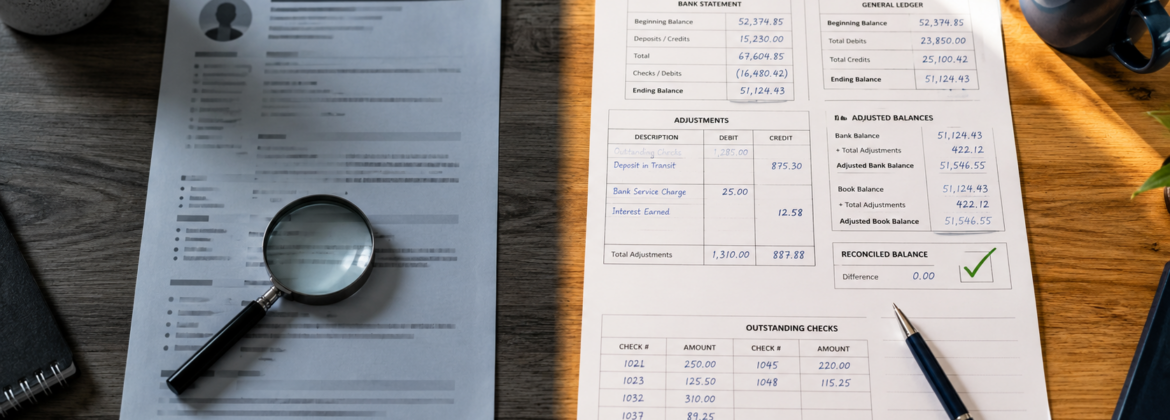
| Bank reconciliations | The single most job-realistic bookkeeping task; finding and resolving a discrepancy |
| Error-spotting & correction | Hand them a flawed set; the ability to catch what’s wrong is exercised daily |
| Software navigation | Can they actually drive QuickBooks Online, Accounting CS, UltraTax, or Xero? |
| Payroll & sales tax basics | Core recurring deliverables for most small-business clients |
| Review-note response | Can they take correction and self-correct? The most underrated trainability signal |
| Speed + accuracy together | Accurate-but-glacial is a capacity problem wearing a quality halo |
Why multiple-choice tests aren’t enough
Most off-the-shelf accounting tests (and there’s a real market — Criteria, Accountests, Hire Success, and others) measure knowledge: can the candidate recall what a deferred liability is, pick the right answer about accrual vs. cash. That’s useful as a screen, but it has a fatal limit — it tests memory, not work product. A candidate can know what a bank reconciliation is and be unable to actually complete one. And in the AI era, the limit is worse: a candidate taking an at-home multiple-choice test with a chatbot open in the next tab will ace the knowledge questions and tell you nothing.
Knowledge tests answer “does this person know about accounting?” The question you’re actually hiring for is “can this person do accounting?” Those are different questions, and only one of them predicts performance.
The Better Model: Sample Client Work Under Realistic Conditions
This is why the validity research points so decisively to work samples — and why the strongest accounting assessment isn’t a quiz, it’s a realistic piece of client work the candidate actually performs. Give them sample client data and have them produce the deliverable: process the transactions, complete the reconciliation, prepare the sales tax return, in the actual software. Then assess the work product itself — because if their reconciliation balances and their return is right, they can do the job, and if it doesn’t, they can’t. No memorized answer can fake a correct deliverable.
Work-sample testing also neutralizes the AI-cheating problem that’s quietly breaking multiple-choice screening: a candidate can paste a knowledge question into a chatbot, but they can’t fake their way through actually driving the software and producing a balanced set of books under observation. Favor execution over description, and for final-stage candidates, proctored conditions (single login, single monitor) over unsupervised at-home tests.
One important caution from the research: no single test is sufficient on its own. Even a strong error-checking test should be paired with other methods — a work sample, plus a structured interview for communication and fit, plus reference checks for the factual record. The work sample is the highest-validity centerpiece, not the entire process. (This connects directly to structured onboarding — see structured training vs. shadowing.)
What to Test Before the Offer vs. After Day One
Assessment isn’t a single gate — it’s a sequence, and the most important design choice is putting the first real test before the offer letter.
✅ Pre-Offer (the gate that saves you)
Aptitude, accuracy, accounting logic, error-spotting, and basic software workflow — a focused work-sample assessment. This is the highest-ROI hour in your entire hiring process: one avoided mis-hire pays for years of testing.
✅ Post-Hire (the gate that confirms)
A full simulated client year — 12 months of financials, reconciliations, sales tax, quarterly payroll, year-end — inside your real software, gated by assessments at each stage. This both onboards and serves as the final hiring filter.
The sequence matters: pre-offer testing should come before the interview where possible, because interviewing first anchors you emotionally to a likable candidate and you’ll rationalize a weak test result. Test first, and you only spend interview time on people who can demonstrably do the work. (For the full hiring sequence, see how to hire a bookkeeper.)
How to Spot a Mis-Hire Early: The 200% Rule
The post-hire structured assessment gives you something subjective processes never do: objective benchmark data that flags a mis-hire in week one instead of month three. Across 1,000+ trainees, the patterns are clear — an experienced bookkeeper completes a foundational module in 3–4 hours, a newer professional in 8–12. (Full data in how long it takes a new hire to become productive — real benchmarks from 1,000+ trainees.)
The diagnostic that matters most is what I call the 200% rule:
When a new hire runs past 200% of the time benchmark for their experience level and fails the assessment gates after two attempts, you don’t have a slow learner — you have a mis-hire signaling itself in week one.
The combination is the key. Slow-but-passing is a normal learning curve — some capable people are simply methodical, and they’ll speed up. Slow-and-failing is a different signal entirely: it’s a hiring error surfacing early, exactly when it’s cheapest to address. At one member firm, a hire logging 16 hours against a 4-hour office benchmark — January’s financials still unfinished after failed attempts — resigned on day six, before either side had sunk a quarter into the mismatch. That’s the early-warning system working: a six-day correction instead of a 90-day discovery.
The other signals to watch alongside benchmark time: repeated errors of the same type (not learning from correction), inability to self-correct when given a review note, and assessment scores that don’t improve across attempts. Together, these turn the first two weeks of onboarding into the final, objective stage of the hiring decision.
The Accounting Skills Assessment Checklist
Use this as your pre-hire and early-onboarding evaluation framework:
Pre-Offer Work-Sample Assessment
☐ Debits/credits & transaction classification judgment
☐ A bank reconciliation completed from realistic data
☐ Error-spotting on a deliberately flawed set
☐ Software navigation in your actual stack
☐ Speed measured alongside accuracy (timed)
☐ Execution-based, not multiple-choice (AI-resistant)
Post-Hire Verification (first 2–3 weeks)
☐ Full simulated client year in real software
☐ Gated assessments at 80% before progression
☐ Benchmark time tracked against experience level
☐ 200% rule applied (time + failed gates = signal)
☐ Self-correction observed in response to review notes
Frequently Asked Questions
How do you test bookkeeping skills before hiring?
The most predictive method is a work-sample assessment: give the candidate realistic sample client data and have them actually produce the deliverable — process transactions, complete a bank reconciliation, prepare a sales tax return — in the actual software, then evaluate the work product itself. Work samples have the highest predictive validity of any hiring tool (r=0.54, about 2.3x stronger than unstructured interviews). Test execution rather than memorized knowledge, measure speed and accuracy together, include an error-spotting task, and place the assessment before the offer letter (ideally before the interview, so a likable candidate’s weak result isn’t rationalized away). Favor proctored or observed conditions over unsupervised at-home tests, which AI tools have made easy to game.
What should be on an accounting skills assessment?
Seven core areas: debits/credits and transaction classification judgment (reasoning, not memorized definitions); a bank reconciliation completed from realistic data; error-spotting and correction on a deliberately flawed set; software navigation in the firm’s actual stack (QuickBooks Online, Accounting CS, UltraTax, Xero); payroll and sales tax basics; review-note response (can they take correction and self-correct?); and speed measured alongside accuracy under a time limit. The assessment should be execution-based — having the candidate produce real work product — rather than multiple-choice, because knowledge tests measure whether someone knows about accounting, not whether they can actually do it, and are easily gamed with AI tools on at-home tests.
Should CPA firms use pre-employment accounting tests?
Yes — the evidence strongly favors it. Structured assessments predict job performance roughly three times more accurately than interviews alone, work samples are the single most predictive tool available, and gut-feel hiring runs below 60% accuracy. For accounting firms specifically, the economics are decisive: a mis-hire discovered at the typical 60–90 day mark costs a quarter’s salary plus roughly $9,500 in onboarding drag, while a pre-offer skills assessment that catches the same mis-hire costs essentially nothing. One avoided mis-hire pays for years of testing infrastructure. The key is using execution-based work samples rather than knowledge quizzes, and pairing the test with a structured interview and reference checks rather than relying on any single method.
How do you know if a new bookkeeper is trainable?
Trainability shows up in three observable signals during early structured onboarding: response to correction (do they apply a review note and not repeat the error, or make the same mistake again?), improvement across assessment attempts (do scores rise, indicating learning?), and trajectory rather than starting speed (many capable hires start slow on the first two modules and accelerate sharply afterward). The clearest negative signal is the 200% rule — a hire running past double the time benchmark for their experience level while also failing assessment gates after two attempts. Slow-but-improving is trainable; slow-and-not-improving, with no self-correction, is the early signature of a mis-hire. Structured assessment with benchmark data makes trainability visible in week one rather than month three.
What are red flags when hiring accounting staff?
The highest-cost signals: software proficiency claims without specific daily-use detail (“proficient in QuickBooks” but can’t describe what they did in it); inability to quantify prior workload (client counts, close routines); no honest relationship with their own errors (claims of error-free work or blame-shifting); resistance to a reasonable skills assessment (strong candidates usually welcome the chance to prove ability); interview polish dramatically out of proportion to assessment performance (the resume embellishment tax announcing itself); and, post-hire, running past 200% of the time benchmark while failing assessment gates. The most dangerous red flag is internal: rationalizing a weak assessment result because you liked the candidate, which is exactly why testing should precede the interview.
Are accounting skills tests accurate, or can candidates fake them?
Work-sample tests are the most accurate hiring tool available (predictive validity r=0.54), but accuracy depends on design. Multiple-choice knowledge tests are increasingly easy to fake — a candidate taking an at-home test with an AI chatbot open will ace the questions while revealing nothing about ability. Execution-based work samples are far harder to game: a candidate can’t fake their way through actually producing a balanced reconciliation or a correct return in the software, especially under observed or proctored conditions (single login, single monitor for final-stage candidates). The principle is to measure what the candidate can do with their hands in the software, not what they can describe or recall — because descriptions and recall are now essentially free.
The Bottom Line
The hiring science has been settled for years, and it points in one direction: the best predictor of whether someone can do a job is watching them do a realistic version of it. Work samples beat interviews, interviews beat résumés, and gut feel barely beats a coin flip. Yet most accounting firms still run the process in reverse — weighting the weakest predictors (résumé, interview, software claims) and discovering the strongest evidence (actual work product) only after the person is on payroll and the managers are already correcting.
Flip the order. Test execution before the offer, with a work sample that has the candidate produce real accounting work in real software. Verify with structured, gated onboarding that doubles as the final hiring filter. Watch the benchmark data and honor the 200% rule. Do that, and the mis-hire that used to cost you a fiscal quarter and $25,000 becomes a candidate you simply don’t extend an offer to — or a hire you part ways with in week one instead of month three.
You can’t tell whether someone can do accounting work by talking to them about accounting work. You find out by watching them do it — and the cheapest time to find out is before the offer letter, not after the damage.
Want execution-based skills testing built into your hiring and onboarding?
Book Your Free 10-Minute Structural Alignment Review →
In ten minutes we’ll show you the pre-employment testing engine and the gated, benchmark-tracked onboarding pathway — work-sample assessment before the offer, full simulated client work after — running inside the software your firm already uses, so you verify ability before a candidate ever touches a real client file.
Our 45-Day Out-of-Pocket Performance Guarantee: Put your next hires through our system — if it doesn’t improve your onboarding, we’ll refund your investment.
To your firm’s capacity,
Vincent Howard, CPA
Managing Partner, Howard, Howard and Hodges
SkillAbility for Accounting Firms
About the Author
Vincent Howard, CPA has practiced public accounting since 1990. He holds a Master’s degree in Taxation from the University of Central Florida, leads a 50-person multi-state firm, and built the Skillability staff development platform used by accounting firms nationwide through the PASBA network — the source of the 1,000+ trainee benchmark dataset referenced in this article. Howard, Howard and Hodges was named PASBA Firm of the Year and has offices in Lake Mary, Sarasota, and Winter Springs, Florida.
© 2026 SkillAbility for Accounting Firms. 45-Day Out-of-Pocket Performance Guarantee applies to qualifying onboarding engagements. Contact us for full terms.